
Eldersburg City Directory Collections
There is no continuous printed Eldersburg directory run. No confirmed reverse directory exists either. The usable record is really a family of related sources: regional telephone reels, Maryland State Archives series, Carroll County Genealogical Society material, and historical newspapers. Each fills a different part of the gap. Treat any listing as evidence tied to its edition and page, never as a complete roll of households.
| Historical source | Verified dates | Custodian | How to use it |
|---|---|---|---|
| Maryland telephone-directory reels | 1951-52, 1954-56, 1961-62, 1963, 1965, 1970-71 | Library of Congress | Digitized, dated subscriber and address leads |
| Maryland Gazetteer and Business Directory | 1909-1917 | Maryland State Archives | Place and public-facing business context |
| Westminster directory evidence | 1881, 1887, 1959 | Archives and official historical references | Nearby county-seat context, not an Eldersburg run |
| Carroll historical collections | Dates vary by collection | CCGS and HSCCMD | Maps, family files, newspapers, indexes, and local history |
Begin with the dated source nearest the event or address you care about. The Archives directory series points to a 1959 Westminster city directory. It also covers the 1909-1917 gazetteer volumes. Those are strong Carroll County leads. Still, neither one covers Eldersburg itself, so neither should be labeled an Eldersburg directory.
Note: Missing years and selective subscriptions mean county-seat coverage, so a no-result calls for another collection, not a conclusion about a household.
Eldersburg City Directory Research Shelves
Carroll County Genealogical Society resources offer local maps, death abstracts, burial notices, ledgers, family-farm material, and supporting indexes. These support a directory search. The reference library is non-circulating. Its listed hours run Monday through Thursday, 9 a.m. to 8 p.m., and Friday through Saturday, 9 a.m. to 5 p.m. Researchers should confirm access before visiting. Volunteers assist with storage on Thursday afternoons. Advance arrangements can be made through the society.
The public-library route matters just as much. Carroll County Public Library connects its databases, Times Archive, Digital Maryland, Community Directory, and branches through its local-history gateway. The Eldersburg branch is a practical inspection point for county hearing packets, newspapers, and library databases. A county office often keeps the actual records. The Community Directory lists organizations and services rather than residents.
Use the counter route when nothing is online. The CCGS library holds reference-only materials. The Historical Society can require an appointment for undigitized items. Give staff a workable target. A surname, church, road, approximate date, or newspaper title makes the request concrete.
A view of the CCGS research resources shows the local-history starting point. 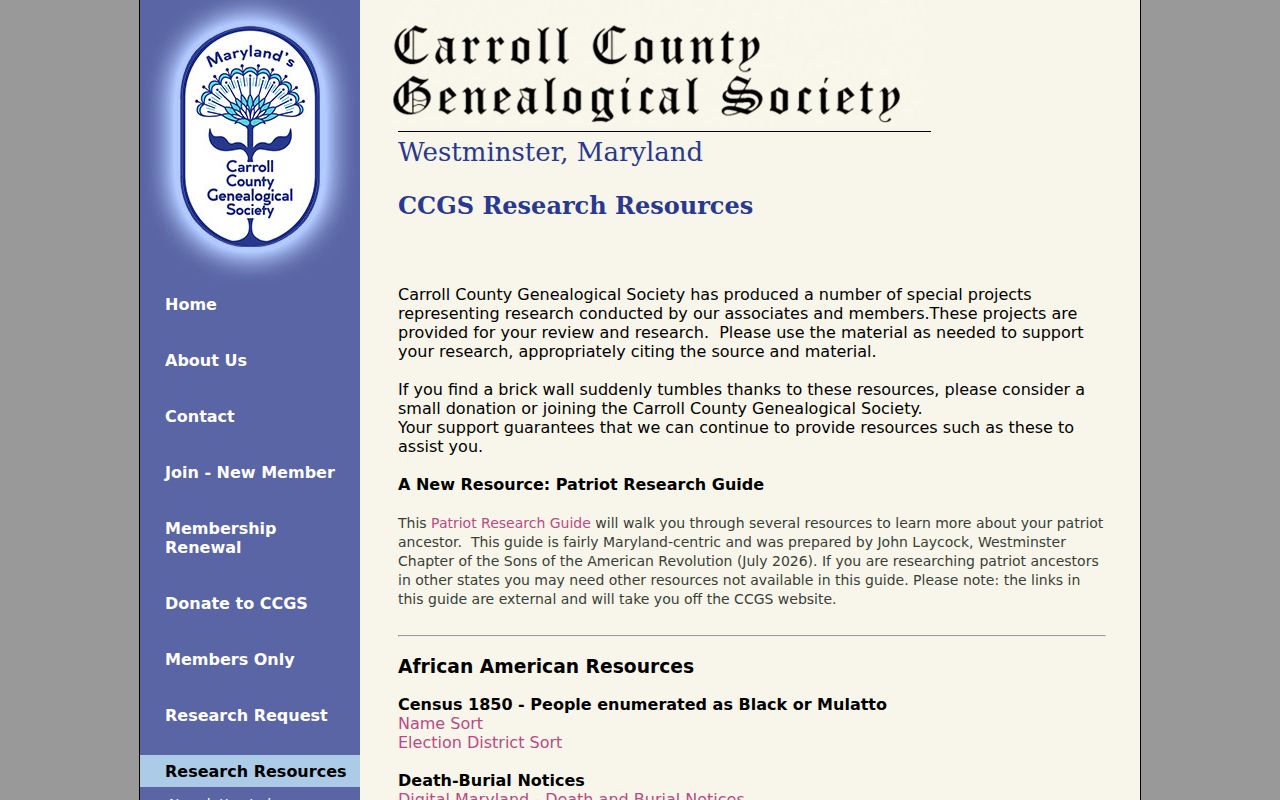 The society’s maps and indexes add place and family context when no yearly Eldersburg directory appears on a shelf.
Eldersburg City Directory Finding Aids
The Historical Society of Carroll County keeps two separate systems. Its CatalogIt database covers objects, photographs, and individual documents. Its Digital Library holds periodicals, newspapers, and exhibits. The finding aids identify family-history files, a Bible Records Index, and historic sites. They also cover microfilm, military material, newspaper listings, and vertical files. Filters narrow a search by year, author, collection, item, and page. That structure shines when an old directory lead offers only a surname and a road.
Undigitized materials require an appointment at 410-848-6494. The Society also accepts paid research requests built around a defined subject and specific information. Its fee structure distinguishes member from nonmember assistance. A request buys research service, not a guaranteed name-search result.
The Historical Society collections hub shows the split between catalog and digital-library material. 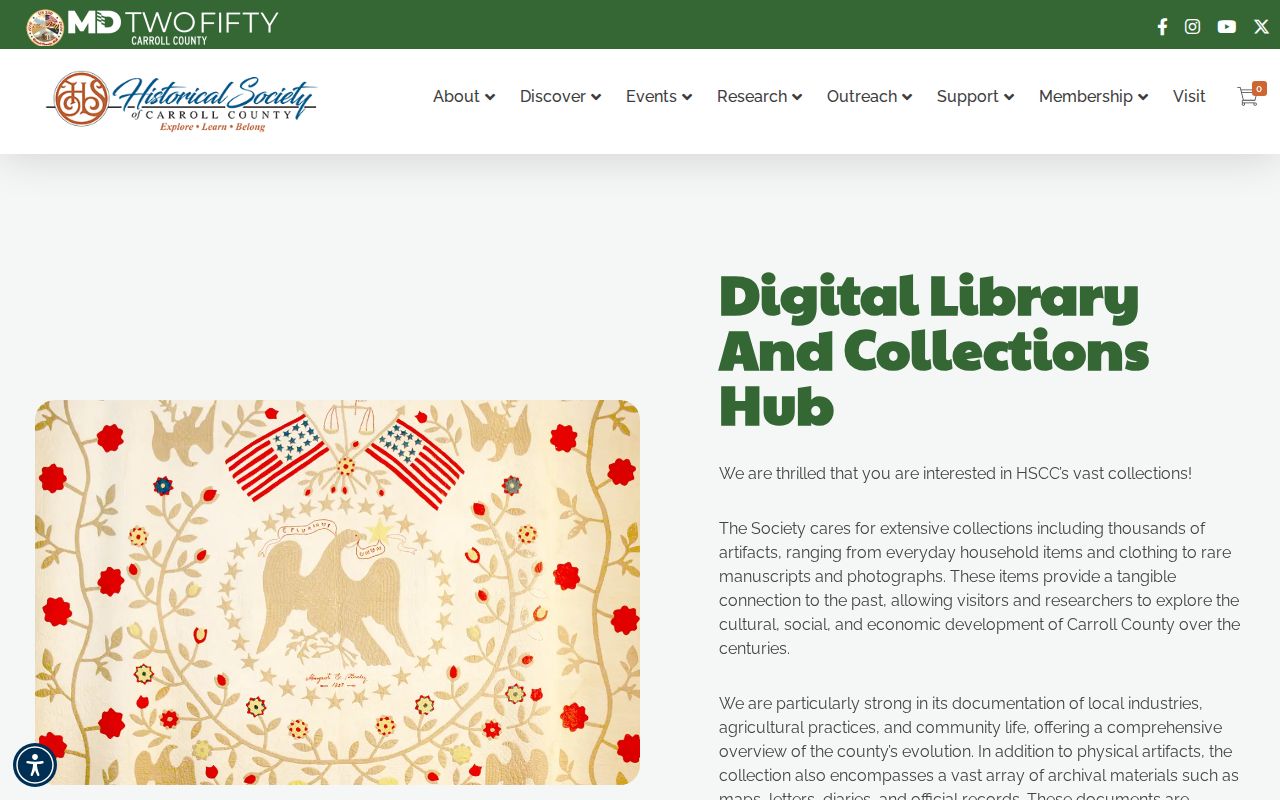 Pair a search result with its collection and page so another researcher can return to the same item.
Reading an Eldersburg City Directory
A telephone-directory line and a traditional city-directory entry are not the same animal. The Library of Congress reel covering Cardiff through Carroll County, dated August 1954 through February 1956, shows what the format holds. That includes issue metadata, image navigation, residential and business sections, subscriber and organization names, address text, and a telephone exchange or number. It never shows a date of birth. No parcel ID appears either, nor voter status or any current-status field. Read each line for what the printer actually put there.
| Printed name | A subscriber or organization named in that issue, not a confirmed household member. |
|---|---|
| Address text | The address as the publisher printed it; preserve its spelling, suffix, and postal label. |
| Telephone exchange | The exchange and number on the dated line, subject to subscription choice and edition geography. |
| Issue and image | The reel date, page image, and title that make the historical claim checkable. |
- Criss-cross directory
- An address-first directory. No continuous Carroll County or Eldersburg run was verified, so regional telephone pages should not be given this label.
- Householder index
- A name arrangement intended to locate a household head. A telephone subscriber is not necessarily the householder.
- Abbreviation key
- A publisher’s explanation of shortened labels, usually near the front of a volume. Photograph it when it exists.
Note: A subscriber line can identify a person, organization, property owner, or family member, so record exactly what the printed source says.
Eldersburg Telephone Directory Reels
The Library of Congress holds regional Maryland White and Yellow Pages reels for the Westminster and Carroll area, spanning 1951-52, 1954-56, 1961-62, 1963, 1965, and 1970-71. These are the closest verified substitute for dated Eldersburg subscriber evidence. Search a name, an Eldersburg or Eldersburgh spelling, a church, a road, or an organization. Then read the whole page before concluding anything.
A scan from the Maryland historical collections illustrates a companion research route. 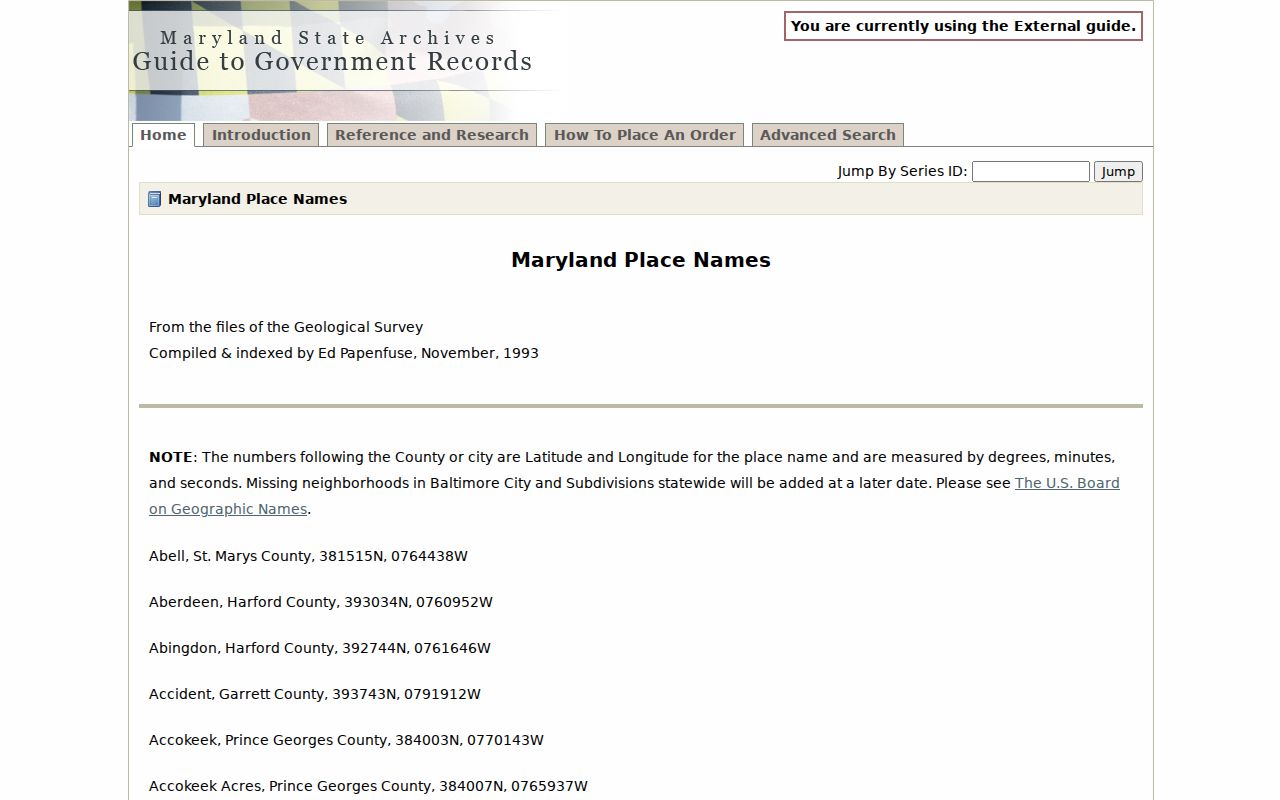 The edition’s geography and a person’s decision to subscribe limit what a line can establish about any address.
Newspapers are the next useful check. The Historical Society's online runs include the Carroll News, Carroll County Times, and Union Bridge Pilot. Chronicling America's Democratic Advocate issues span 1865-1972. Cite the issue, page, image, event date, and the person's role in each notice. Be careful with addresses. A meeting location, mailing address, or relative's residence is not automatically the subject's home.
Eldersburg Place Names in Print
Old labels deserve their own check. Do this before tying a directory result to a modern address. The Maryland State Archives place-name material and the 1941 Gazetteer place Eldersburg in Carroll County. Both describe the historical village as three miles northeast of Sykesville. That locates an old notice nicely. It says nothing about a current boundary. County planning sources further separate the Eldersburg Census-designated place from the Freedom Community Planning Area.
Keep Eldersburg, Eldersburgh, nearby post-office names, crossroads, and road spellings in the notes. CCGS lists an Eldersburg map and a Winfield-to-Eldersburg map along Old Liberty Road. Compare an old label to the modern parcel map only after the deed, map, or source date supports the connection. The source date has to back the match.
The Historical Society finding aids show the available collection filters. 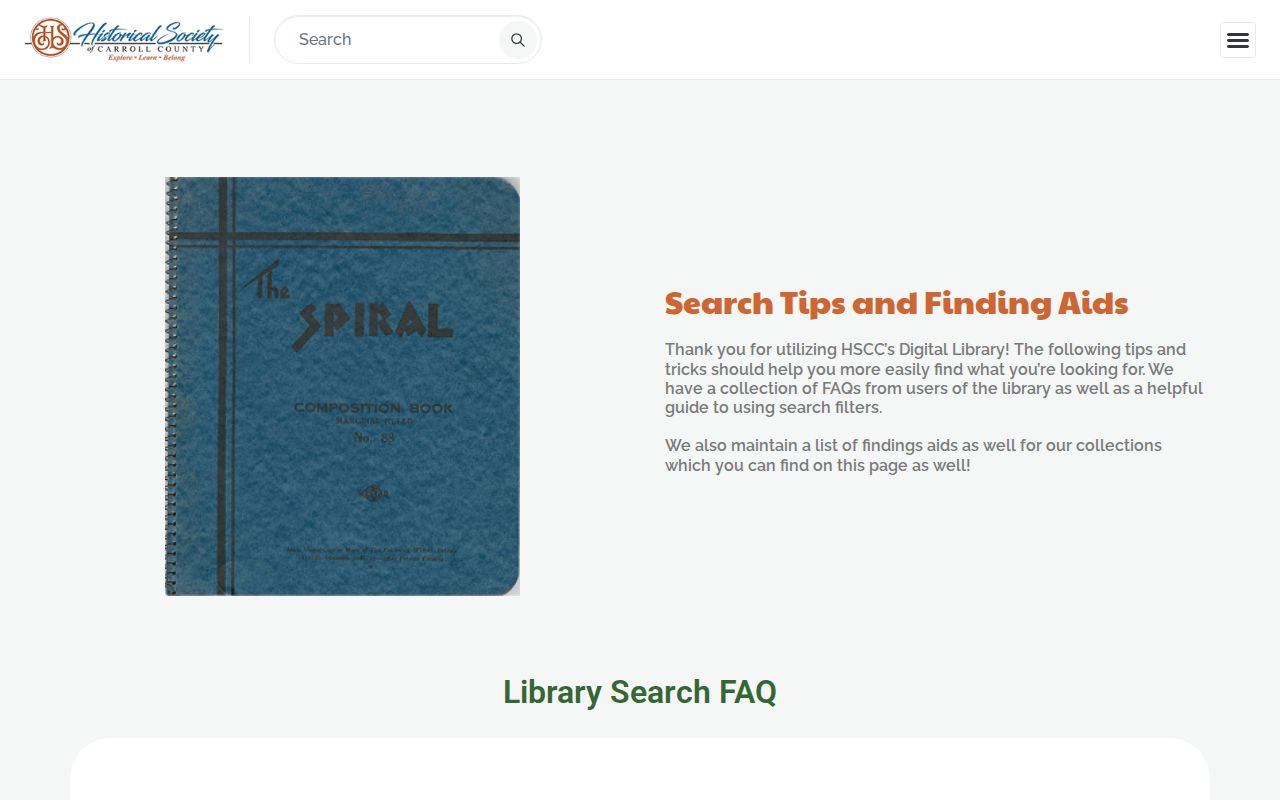 A historical place name explains a search term; it does not turn a nearby Sykesville or Westminster record into an Eldersburg municipal record.
Trace Families With Eldersburg City Directories
A city-directory entry works best as one dated point on a longer family-history trail. Start with an edition or a newspaper mention. Then test the name against another record. Agreement across sources is what builds the proof. The FamilySearch Carroll County catalog can point to Carrolltonian material, courthouse records, and broader directory holdings, though an account or viewer limit may affect image access. Federal census schedules released through 1950 add a separate household snapshot under the public-release rule.
- Find the earliest dated listing or notice and save its title, issue, page, and image.
- Search forward through the regional telephone reels, newspapers, and indexed collections for the same spelling and address.
- Compare the printed road with CCGS maps, place-name sources, and a census geography when the name changes.
- Use Archives, CCGS, or Historical Society holdings when the online run ends, asking for a narrow date and subject.
- Close the historical trail with a later notice, cemetery lead, estate record, or census entry while keeping each record date visible.
A missing name is not proof of anything. The person may have moved, died, or let a subscription lapse, and spelling shifts or an edition's limited reach can hide a household just as easily. For a modern parcel-by-address route once the history is settled, the Eldersburg street directory keeps current public property records apart from the historical shelf. Keep those two worlds separate.
Eldersburg City Directory Timeline
The record trail is layered, not continuous. That layering is itself useful. It shows which source can support a given era, where each gap begins, and why Westminster publications should never be treated as coverage of all Eldersburg.
| 1837 | Carroll County’s land-record series begins with the county’s formation, creating the longer address-history backbone. |
|---|---|
| 1909-1917 | Maryland State Gazetteer and Business Directory volumes provide county place and public-contact context. |
| 1951-1971 | Regional telephone-directory reels provide several dated subscriber snapshots. |
| 1959 | The Archives series lists a Westminster City Directory, useful nearby evidence but not an Eldersburg run. |
The missing pieces matter too. No continuous Eldersburg directory series exists. No criss-cross run or Sanborn map exists. The library, CCGS, the Historical Society, the Archives, the Library of Congress, and a focused county records request each open a separate access channel rather than a generic substitute. The result is stronger when every collection stays tied to the date and role it actually records.